11 September 2026
Gym and School Lockers in Singapore: A Buyer's Guide
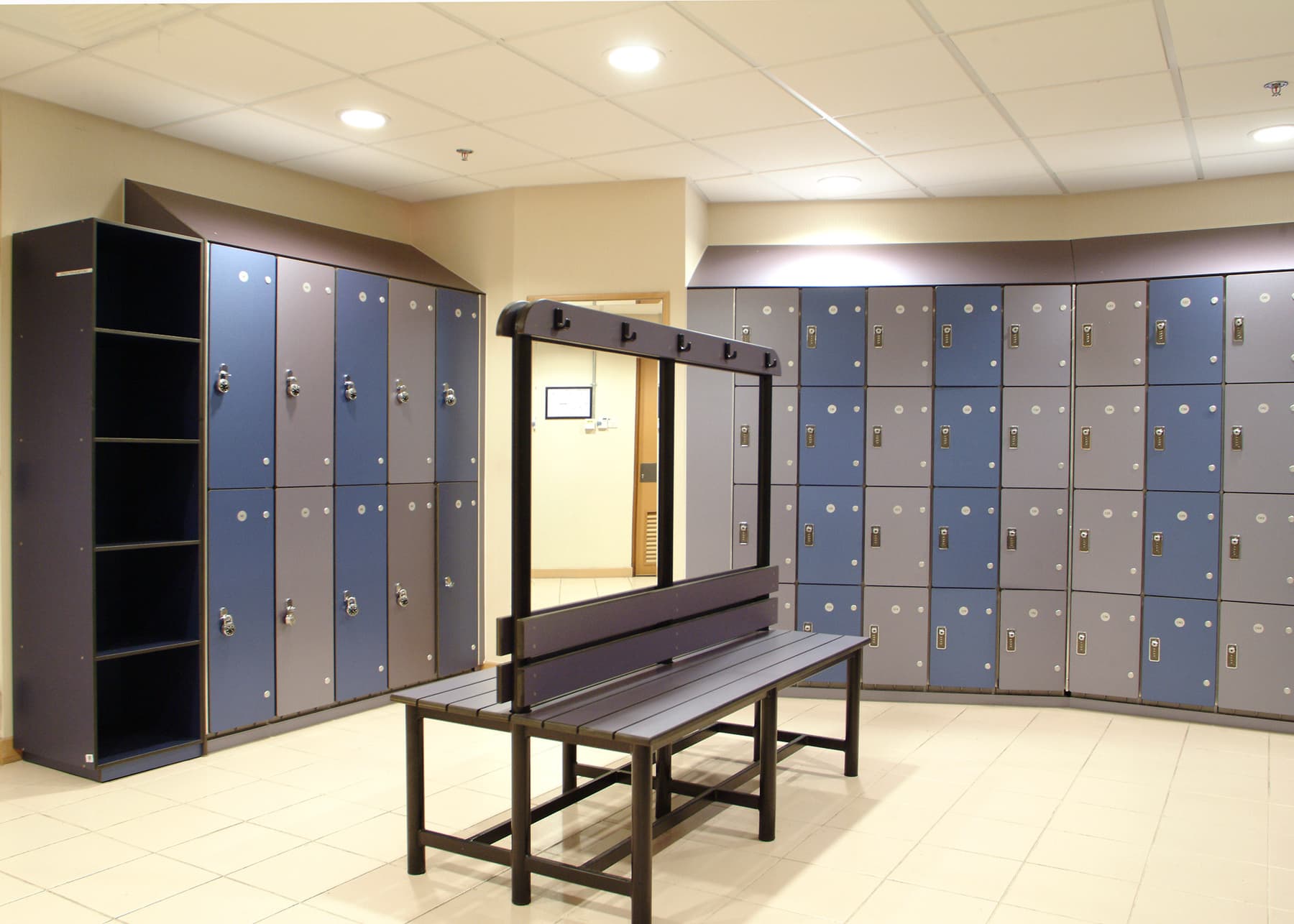
Table of Contents
A changing room is judged in its second year, not its first. Cheap lockers look fine on handover day and then swell, rust or sag once the humidity and daily use get to them. For gym and school lockers in Singapore, solid phenolic is the material to specify, because it resists water and bacteria through its full thickness rather than at a painted surface that eventually fails. Steel and laminate-over-particleboard both have a place. A wet changing room is not it.
This guide covers what actually separates a locker that lasts fifteen years from one you replace in five: the core material, the format, the lock, and the sizing decisions that quietly decide whether the room works. For the full range, see Prospec's locker systems.
Key Takeaways
-
Solid phenolic lockers are water-resistant and anti-microbial through the whole panel, which is why they hold up in humid, high-use Singapore changing rooms where steel and MDF struggle.
-
Gym and school lockers face different demands: gyms need wet-area resilience and secure day-use locks; schools need dense storage and a tamper-resistant, low-maintenance format.
-
Format (Classic, Jumbo, Z or glass), lock type and correct sizing matter as much as the material, and they are the things most often decided too late.
Why Locker Material Matters More Than the Brochure
Singapore's climate is the real test. Average relative humidity sits around 84% (Meteorological Service Singapore, 2024), and a locker bay outside the air-conditioned envelope, near showers or a pool, lives in near-constant damp. That is exactly where the wrong material shows.
Powder-coated steel lockers look robust and cost less up front. Chip the coating, and the edge starts to rust. Once moisture reaches the substrate of a laminate-over-particleboard locker, the door swells and stops closing square. Neither problem is cosmetic. A door that won't shut is a locker out of service.
Solid phenolic works differently. It is compact laminate, dense and consistent through the entire panel core, so a scratch or a drilled edge exposes more of the same water-resistant material rather than a vulnerable inside. Marathon lockers are built from these solid phenolic panels, which are durable, scratch-resistant, water-resistant and anti-microbial through their thickness (Marathon manufacturer specification). That last property matters in a shared changing room, where the surface is handled wet, hundreds of times a day.
There is a certification angle too. Ask any supplier for their Green Label documentation under the Singapore Green Building Council scheme before you commit, especially on a project chasing a green rating. If they can produce it, the material claims are independently backed rather than marketing.

Gym Lockers vs School Lockers: Different Jobs
It is tempting to treat lockers as one product. They are not. A gym locker and a school locker solve different problems, and the right specification follows the use.
Gym and club lockers live in the wettest, busiest part of the building. Members arrive, change, shower and leave, often within the hour, so the priority is wet-area durability and a lock that suits fast day-use turnover rather than a fixed owner. Hotels, sports clubs and private gyms also care how the bay looks, because members see it every visit. Here the material choice is non-negotiable: specify phenolic, not steel.
School lockers carry a different load. Storage density and resilience come first. The lockers take knocks, bags, the occasional kicked door, and years of it. A tamper-resistant format with a simple, robust lock and almost no maintenance overhead beats a fancier system that needs servicing. Corridors are also narrower, so the format has to earn its footprint.
Both benefit from phenolic for the same underlying reason: a material that does not swell, rust or harbour bacteria means fewer replacements and less downtime. The difference is in the format and the lock, not the core.
Locker Formats and How to Choose
The format decides how much you store and how the bay reads. Marathon offers four main configurations, and the choice usually comes down to who uses the locker and for how long.
-
Classic, the standard vertical locker, one to several tiers. The default for schools, staff rooms and general changing areas where each user gets a full-height or half-height compartment.
-
Jumbo, deeper and wider, built for bulky kit: sports bags, helmets, equipment. Worth it where users bring more than a wallet and a towel.
-
Z-shape, interlocking Z doors that give two users nearly full-height hanging space in the footprint of one, so a jacket or a gym outfit hangs without folding. Strong choice for offices and premium gyms where hanging length matters. See the Z-locker format for the layout.
-
Glass-front, for hotels and high-end clubs where the look is part of the service.
A quick way to decide: match the compartment to what people carry. Wallet-and-towel gyms take Classic or Z. Kit-heavy sports facilities take Jumbo. School corridors take dense Classic tiers. Modular construction also means the run can follow a curved or awkward wall rather than forcing a straight line, which helps in older buildings and tight retrofits.

Locks, Sizing and the Details That Get Missed
Two things get decided too late on most locker projects: the lock and the sizing. Both are hard to change after installation.
On locks, match the mechanism to the user, not the budget line. Day-use bays with rotating members suit a coin-return or electronic lock that frees the locker for the next person. Assigned school or staff lockers suit a simple keyed or padlock hasp. Higher-security or hospitality settings often want RFID or keypad access. The point is to choose before the doors are drilled, because retrofitting a different lockset later is fiddly and rarely tidy.
On sizing, count the peak, not the average. A gym bay sized for a normal Tuesday overflows at a Saturday class. Under-provision and members leave bags on benches; over-provision and you have paid for dead space. Tier height is the other trap: half-height lockers double your count but only suit short storage, so mixing full and half tiers across a bay usually serves a real user mix better than one uniform height.
For wet changing rooms, the same logic that governs cubicles applies to lockers. Our phenolic toilet cubicles and lockers guide walks through the material case in more depth, and the cubicle range shares the same phenolic construction, which keeps a washroom and its changing area visually consistent.
Get the material right and the rest is refinement. Get it wrong, and no lock or layout saves a locker that has already swollen shut.
Frequently Asked Questions
Are phenolic lockers better than steel lockers in Singapore?
For wet or humid areas, yes. Steel relies on a coating that rusts once chipped, while solid phenolic is water-resistant through its full thickness. In a dry, air-conditioned office both can work, but changing rooms and poolside bays should be phenolic.
What is the best locker format for a school?
Dense Classic tiers usually suit schools best. They give the highest storage count per metre of corridor, take daily abuse well, and need almost no maintenance. Mixing full and half heights across a bay can match a real mix of student needs.
What locks can gym lockers use?
Options range from coin-return and keyed locks to electronic keypad and RFID access. Day-use gyms often prefer coin-return or electronic locks that release the locker for the next member, while assigned lockers suit a simple keyed lockset. Decide before installation, since the lockset location is drilled into the door.
Can lockers be installed along a curved or uneven wall?
Yes. Marathon's modular construction lets a locker run follow a curved or stepped wall, which is useful in older buildings and tight retrofits where a straight bank will not fit.
How long do good lockers last?
A properly specified phenolic locker bay lasts well over a decade in heavy use, because the material does not rust or swell. The usual reason lockers get replaced early is the wrong material in a wet area, not wear on the phenolic itself.
Where can I see Prospec's locker range?
Prospec supplies Marathon phenolic lockers in Classic, Jumbo, Z and glass formats for gyms, schools, hotels and clubs across Singapore. See the locker systems page, or contact the team to size a bay for your space.