29 June 2026
Engineered Timber Flooring in Singapore: A Complete Guide
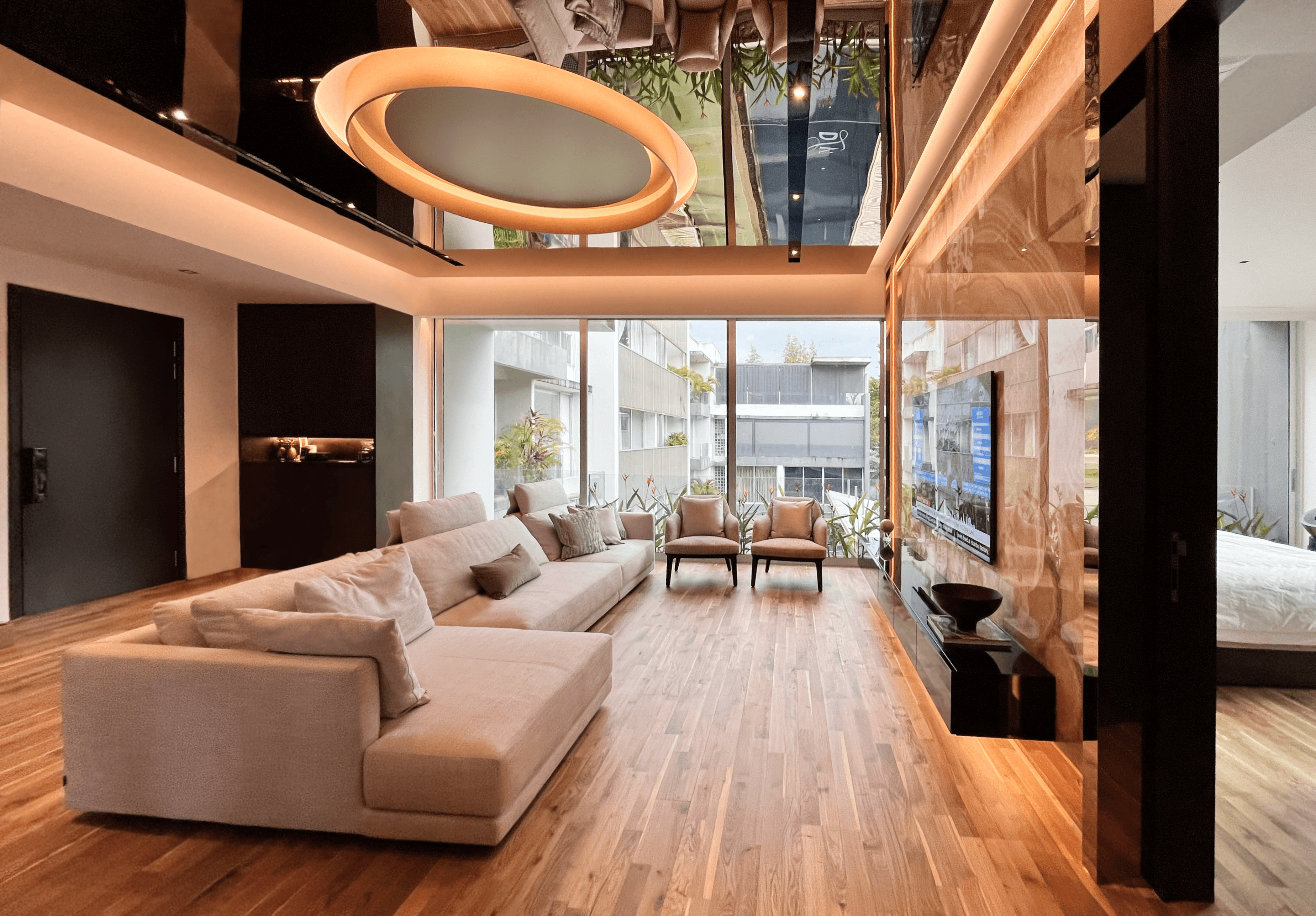
Table of Contents
Choosing a timber floor in Singapore means balancing the warmth and character of real wood against a climate that is unkind to it. Solid hardwood can cup, gap or warp as humidity swings, which puts many specifiers off natural timber altogether.
Engineered timber flooring solves this: it gives you a genuine hardwood surface on a dimensionally stable core, so it stays flat in Singapore's humidity where solid wood would move. That stability is the reason engineered boards have become the default choice for homes, showflats and commercial interiors here.
This guide explains what engineered timber actually is, how it compares to the alternatives, and how to choose a board that will last. For the full range of finishes and species, see Prospec's timber flooring collection.
Key Takeaways
-
Engineered timber has a real hardwood top layer bonded to a stable plywood or HDF core, so it resists the movement that plagues solid wood in humid climates.
-
It looks identical to solid hardwood once installed, but is more stable, often easier to fit, and available pre-finished.
-
The wear layer thickness, core quality and finish matter more than the species when judging how long a board will last.
What Is Engineered Timber Flooring?
Engineered timber flooring is a multi-layer board. The top is a slice of real hardwood — the wear layer or lamella — bonded to a core of cross-laminated plywood or high-density fibreboard.
Because the core layers run in alternating directions, the board resists expansion and contraction far better than a single piece of solid wood. The surface you see and walk on is genuine timber; the engineering sits underneath.
The wear layer
The wear layer is the part that defines the floor's life. A thicker lamella (commonly 2–6 mm) means the floor can be sanded and re-finished more times over its life, much like a solid timber floor.
This is why a quality engineered board is not a compromise. With a thick enough wear layer, it can be refurbished decades later rather than replaced.
Species and grading
The visible hardwood can be almost any species — oak is the most popular in Singapore for its warm tone and consistency. The grading (how much knotting and grain variation the boards show) sets the overall look, from clean and uniform to rustic and characterful.
Prospec supplies Junckers and other European engineered timber, including oak in several gradings — see the timber flooring range for the available looks.
Why Engineered Timber Suits Singapore's Climate
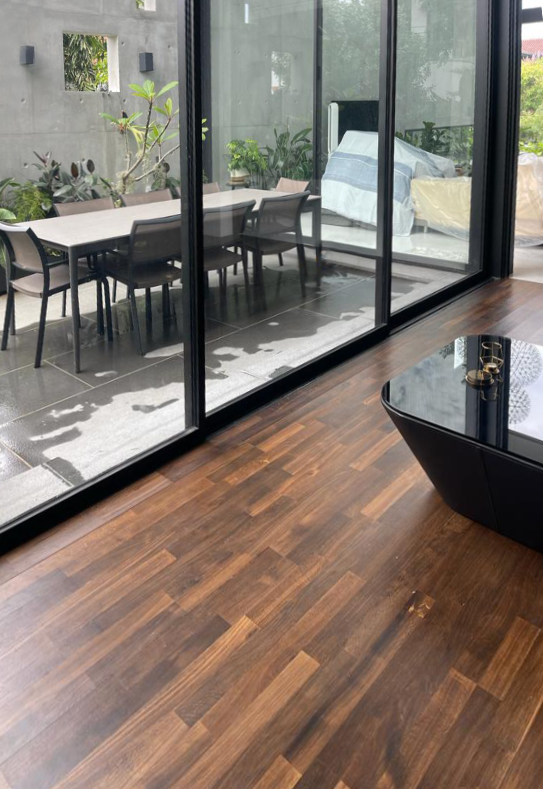
Singapore's near-constant high humidity is the single biggest enemy of a timber floor. Wood absorbs and releases moisture from the air, expanding and shrinking as it does.
In a solid hardwood floor, that movement shows up as cupping, gapping between boards, or warping. Air-conditioning makes it worse, because spaces cycle between humid and dry.
Dimensional stability
The cross-layered core of an engineered board counteracts this. Each layer restrains the others, so the board moves a fraction of what solid wood would across the same humidity range.
For Singapore interiors — especially those that are air-conditioned intermittently — this stability is the practical reason engineered timber is specified over solid wood.
Suitability across spaces
That stability also widens where timber can go. Engineered boards perform well in living areas, bedrooms, showflats and light-commercial spaces. (Wet areas and outdoor use are still better served by other surfaces — talk to a supplier about the specific space.)
Engineered vs. Solid Wood vs. Laminate
It helps to see the three options side by side, because they are often confused.
Solid hardwood is a single piece of timber. Beautiful and long-lived, but the most prone to movement in humidity, usually the most expensive, and the most demanding to install and maintain in Singapore.
Engineered timber is real hardwood on a stable core. It looks the same as solid wood underfoot, resists humidity far better, and is often available pre-finished for a faster, cleaner installation.
Laminate is not timber at all — it is a printed photographic layer under a hard wear coat. It is the cheapest and very scratch-resistant, but it cannot be sanded, and underfoot it lacks the feel and acoustic warmth of real wood.
For most Singapore projects that want the look and feel of real timber without the risk of solid wood, engineered timber is the sensible middle ground. If your priority is a hard-wearing surface for a high-traffic sports hall rather than a living space, Prospec's wooden sports flooring is a separate, purpose-built system.
Choosing the Right Engineered Board
Once you have decided on engineered timber, a few specifications matter more than the marketing.
Wear layer thickness
This is the first thing to check. A thicker wear layer means more re-sanding cycles and a longer usable life. For a floor you want to keep for decades, prioritise wear layer over a lower headline price.
Core quality
A good multi-ply or HDF core gives the board its stability and its underfoot solidity. Cheaper cores can feel hollow and are less forgiving of subfloor imperfections.
Finish and grading
Pre-finished boards arrive sealed and ready, which speeds up installation and gives a factory-consistent surface. Choose the grading for the look you want — cleaner grades for a calm, contemporary space; more characterful grades for warmth.
Board format
Wider, longer boards read as more premium and contemporary; narrower boards suit traditional interiors. Consider the room size — large boards can make a small room feel more generous.
Installation and Maintenance
Engineered timber is generally more forgiving to install than solid wood. Depending on the board and subfloor, it can be glued down or floated, and pre-finished boards need no on-site sanding or sealing.
A flat, dry, clean subfloor is the foundation of a good result — most callbacks trace back to subfloor preparation rather than the boards themselves.
Day-to-day care
Maintenance is straightforward: sweep or vacuum grit (the main cause of surface wear), wipe spills promptly, and avoid soaking the floor. Felt pads under furniture and entrance mats do most of the protective work.
Long-term refurbishment
The advantage of a real-wood surface is that it can be refreshed. A board with a sufficient wear layer can be lightly sanded and re-finished years later, restoring it rather than replacing it — a key part of engineered timber's lifetime value.
To discuss species, grading and the right board for a specific Singapore project, get in touch with Prospec.
Frequently Asked Questions
Is engineered timber flooring suitable for Singapore's humidity?
Yes — that is its main advantage. The cross-laminated core resists the expansion and contraction that cause solid wood to cup and gap in humid, air-conditioned interiors, making engineered timber the more stable choice for Singapore.
Can engineered timber flooring be sanded and refinished?
Usually yes, depending on the wear layer thickness. A thicker hardwood top layer allows several sanding and re-finishing cycles over the floor's life, so a quality engineered board can be refurbished rather than replaced.
What is the difference between engineered timber and laminate flooring?
Engineered timber has a real hardwood surface on a stable core, so it looks and feels like solid wood and can be re-sanded. Laminate is a printed image under a wear coat — cheaper and scratch-resistant, but not real wood and not sandable.
How long does engineered timber flooring last?
With a good core, an adequate wear layer and proper care, an engineered timber floor can last for decades and be re-finished along the way. Wear layer thickness and maintenance matter more to longevity than the wood species.
Is engineered timber more expensive than solid wood?
Engineered timber is usually more affordable than solid hardwood of the same species, while offering better stability in Singapore's climate. The exact cost depends on the species, wear layer and finish.