18 August 2026
Clay Lime Plaster in Singapore: A Specifier's Guide
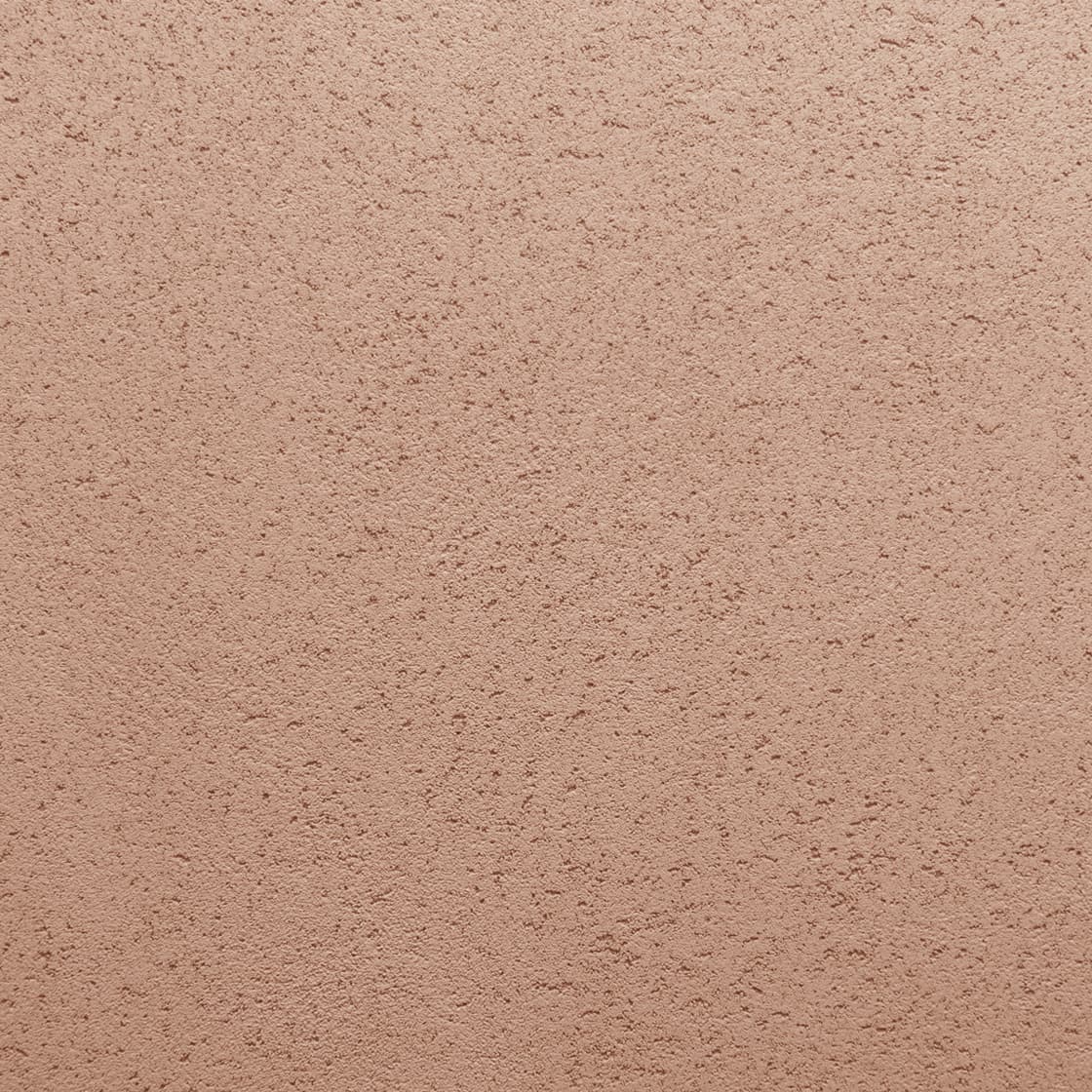
Table of Contents
Most decorative wall finishes are chosen for how they look. Clay lime plaster earns its place for how it behaves. It is a hand-applied mineral finish made from clay, lime and recycled crushed marble, and it does something a painted wall cannot: it breathes.
Clay lime plaster is a natural, breathable, zero-VOC wall finish that gives a smooth, jointless matte stone surface while helping to regulate indoor humidity, which makes it a genuinely practical choice for Singapore interiors. That combination of a calm, tactile look and real material performance is why more specifiers here are writing it into wellness-focused projects.
This guide walks through what the material is, how it copes with local conditions, and where it belongs on a drawing. For the range Prospec supplies, see the clay lime plaster collection.
Key Takeaways
-
Clay lime plaster is a natural mineral finish of clay, lime and recycled crushed marble, applied by hand at roughly 1.5 to 2mm and cured to a matte stone surface.
-
It is breathable and zero VOC, so it helps buffer humidity and does not off-gas into the room, which matters in Singapore's climate and in health-conscious interiors.
-
It is a specialist, specified finish, not an off-the-shelf paint. Substrate, colour and area of use all need to be settled before work starts.
What Clay Lime Plaster Actually Is
Clay lime plaster sits in the same family as polished plaster and limewash paint, but it is its own thing. The Armourcoat clay lime range Prospec supplies is formulated from clay, lime and recycled crushed marble, with a recycled content of 71 to 75 percent and zero VOC (Armourcoat product data, 2025).
The finish is built up by hand in thin coats, typically 1.5 to 2mm total, and cured to a soft, matte, stone-like surface. There is no plastic film sitting on top of the wall. What you get is a solid mineral layer that reads as part of the wall rather than a coating over it.
The look
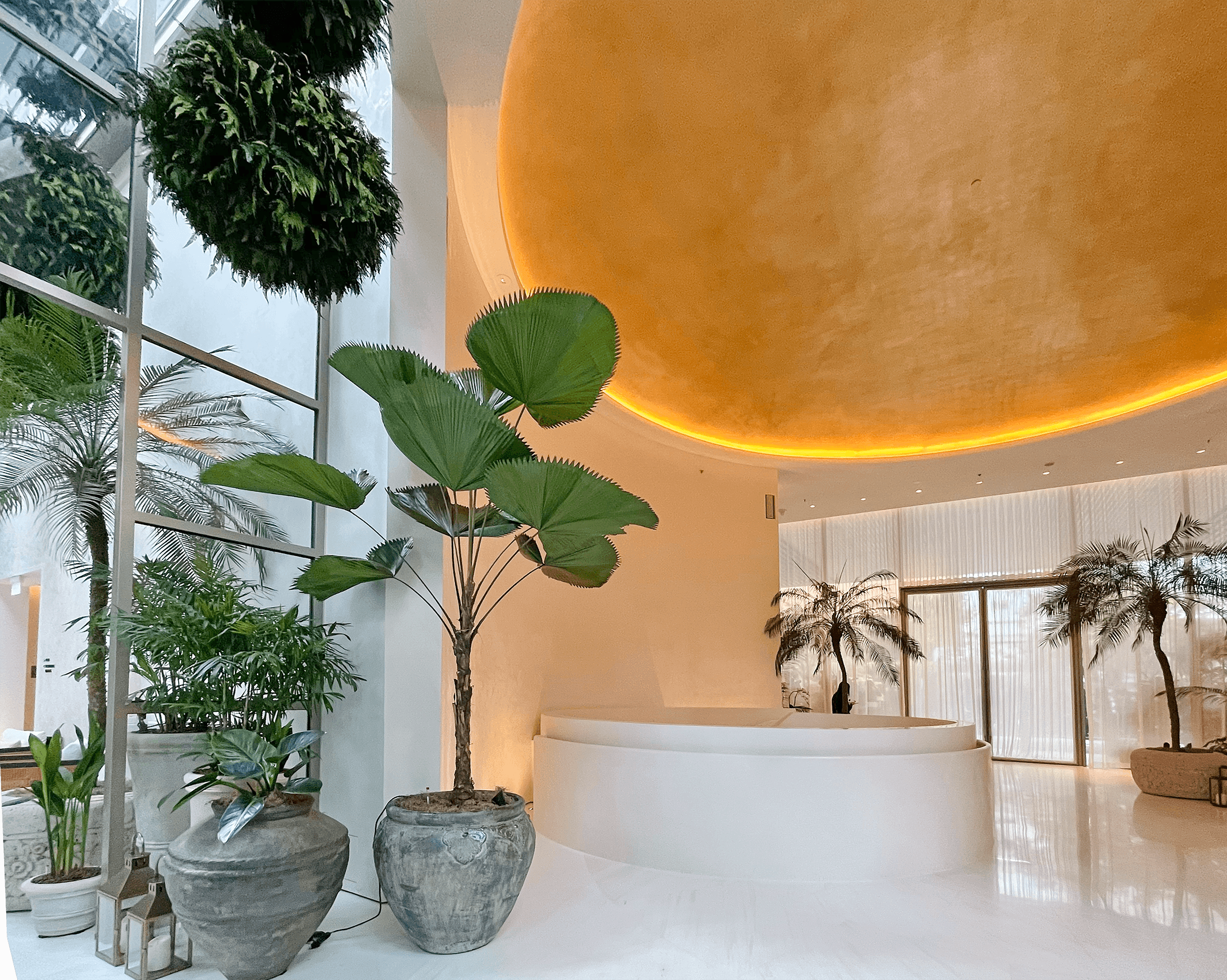
Clay lime plaster is matte and quiet. It has depth without shine, and it takes colour through the body of the material instead of as a surface tint. That gives walls a slightly cloudy, hand-worked quality that flat emulsion never manages. Light moves across it softly through the day.
The chemistry that matters
Because it is lime and clay rather than acrylic, the finish stays open and porous. Water vapour can move in and out of it. That single property is what separates it from a decorative paint, and it is the reason it behaves the way it does in a humid room.
Why It Suits Singapore's Climate
Singapore is humid almost all year. The annual average relative humidity sits at about 84 percent (Meteorological Service Singapore), and indoor air quality is a live concern in tightly sealed, air-conditioned buildings.
A breathable finish helps on both counts. Because clay lime plaster is porous, it can absorb moisture from the air when a room is damp and release it again when the air dries out. It will not fix a building with a genuine damp problem, and it is not a substitute for proper ventilation or waterproofing. But as a wall surface, it works with the humidity rather than trapping it behind a sealed film.
The air-quality angle is the stronger argument. Indoor concentrations of volatile organic compounds commonly run two to five times higher than outdoor levels (US Environmental Protection Agency), and much of that comes from ordinary building materials and paints. A zero-VOC mineral finish adds nothing to that load. For a spa, a clinic, a childcare space or a bedroom, that is a specification you can defend.
It also lines up with where the market is heading. Singapore's Green Building Masterplan targets 80 percent of buildings being green by 2030 (Building and Construction Authority), and low-emission, high-recycled-content materials help a project's case under Green Mark.
Where to Specify It
Clay lime plaster is a feature finish, not a whole-building solution. It rewards being placed where people slow down and notice a wall.
-
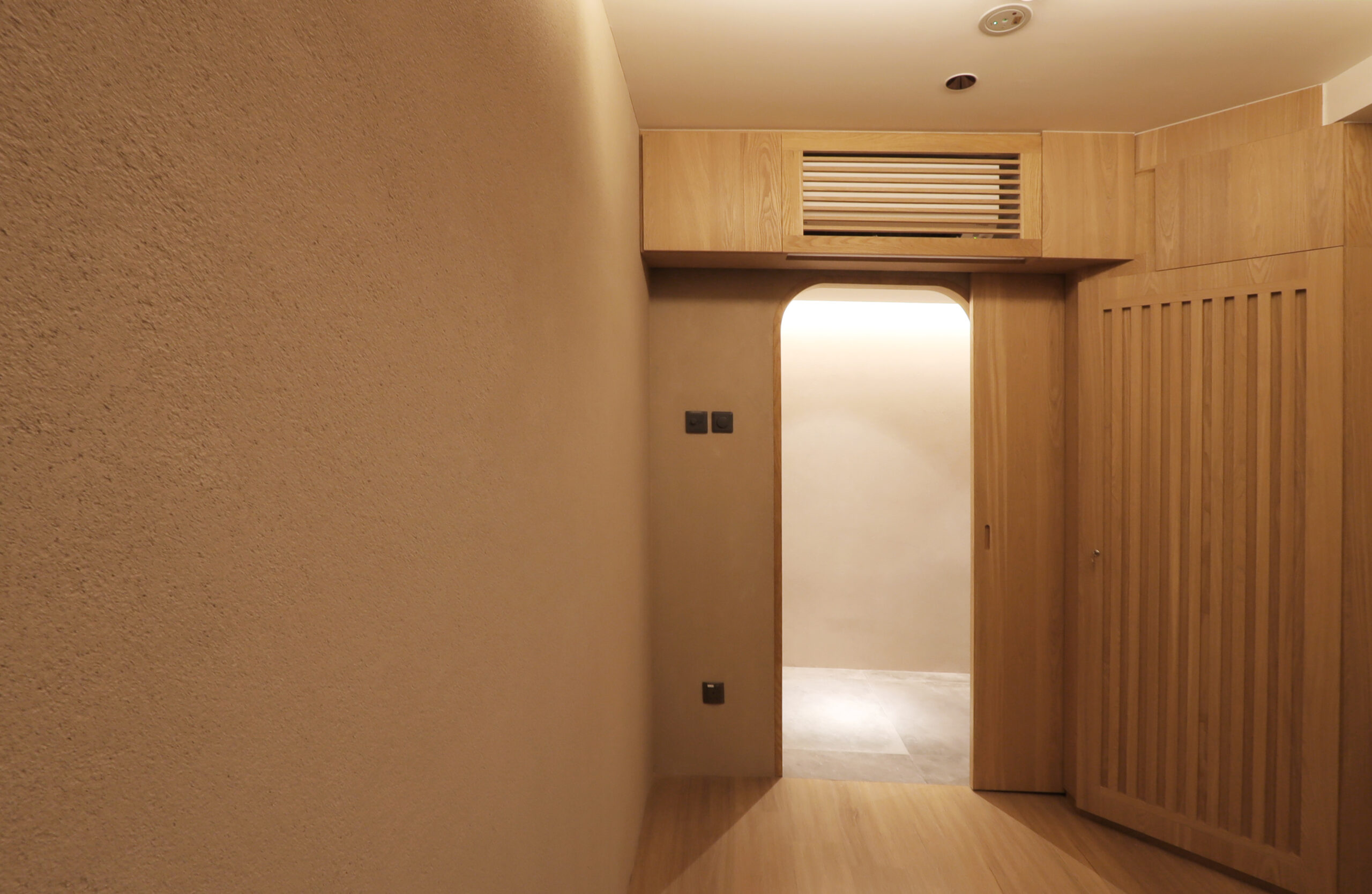
Wellness and hospitality. Spas, treatment rooms, boutique hotels and restaurants, where the matte, natural surface sets a calm tone and the breathability and zero-VOC story support the brand.
-
Residential feature walls. Living rooms, headboard walls and entrances in landed homes and condominiums, where owners want texture and depth over a flat painted wall.
-
Health and education interiors. Clinics, childcare and quiet learning spaces, where indoor air quality is part of the brief.
Clay Lime Plaster vs Other Wall Finishes
The honest comparison is against three things a specifier is usually weighing.
Against decorative paint. Paint is cheaper, faster and easier to touch up. Clay lime plaster costs more and is a skilled hand application, but it delivers depth, a mineral surface and breathability that paint cannot. You are buying a material, not a colour.
Against polished plaster. Both are hand-applied mineral finishes. Polished plaster is burnished to a smooth, often reflective sheen with more visual drama. Clay lime is deliberately matte and understated. The choice is aesthetic first: shine or calm.
Against microcement and other coatings. Many modern coatings are acrylic-based and seal the wall. Clay lime stays open and porous, which is the whole point if humidity buffering and zero VOC are on your list of reasons for choosing it.
Getting the Specification Right
A few things decide whether the finished wall looks right and lasts.
Substrate
Clay lime plaster needs a sound, stable, properly prepared background. New plasterboard or a skim-coated wall is common. The substrate has to be flat and dust-free, because a thin mineral finish follows what is underneath it. Settle this early with the applicator.
Colour and sample
Colour runs through the body of the material and shifts slightly with light and hand technique, so approve a physical sample panel made by the actual applicator, in the actual space if you can. Do not sign off from a printed swatch.
Applicator and programme
This is a specialist trade. The quality of the wall is mostly in the hands applying it, so use an experienced installer and give the finish its place in the programme, after wet trades and with the wall protected afterwards. Rushed application on a poor substrate is where clay lime plaster disappoints, and it is entirely avoidable.
To scope a specific project, start from the decorative wall finishes overview and talk through the substrate and area of use before the finish is locked in.
Frequently Asked Questions
Is clay lime plaster waterproof?
No. It is breathable by design, which is the opposite of waterproof. It handles the general humidity of an air-conditioned Singapore interior well, but it is not for shower enclosures or splash zones. Keep it to walls that stay dry.
How is clay lime plaster different from limewash paint?
Limewash is a thin, brushed lime coating that soaks into the surface. Clay lime plaster is a thicker, trowel-applied mineral layer of clay, lime and crushed marble at around 1.5 to 2mm, with more body, depth and durability. They are related but not the same product.
Does clay lime plaster help with indoor air quality?
It contributes. It is zero VOC, so it adds nothing to a room's VOC load, and its porous surface lets the wall exchange moisture with the air. It is one part of a healthy interior, alongside good ventilation, not a cure on its own.
Can it be applied over an existing painted wall?
Sometimes, but the background has to be sound, flat and correctly prepared, and glossy or unstable paint usually needs treatment first. Have the applicator assess the existing wall rather than assuming it is ready.
How durable is it in a commercial space?
Durable for its intended use. It is a solid mineral finish, not a soft coating, and it holds up well on feature walls and in hospitality settings. In genuinely high-abrasion circulation it will show wear like any decorative finish, so specify it where the wall is seen more than it is knocked.
Is it more expensive than paint?
Yes. It is a specialist, hand-applied material, so it costs more than emulsion. It is specified when the look, the mineral surface and the breathable, zero-VOC properties are worth more to the project than the lowest price.