29 June 2026
Acoustic Plaster Ceilings: A Singapore Specifier's Guide

© Chris Orange
Table of Contents
Open-plan offices, hard-surfaced restaurants and minimalist homes all share one problem: they look beautiful and sound terrible. Glass, concrete and stone reflect sound, so spaces become noisy and tiring — yet most acoustic fixes mean covering the ceiling in visible tiles, baffles or panels.
An acoustic plaster ceiling absorbs sound while looking like a smooth, seamless plaster surface — so you get a quiet room without the suspended-tile grid that designers want to avoid. It is the way to reconcile clean architecture with comfortable acoustics.
This guide explains how acoustic plaster works, where it earns its place, and what to consider when specifying it. For the finish itself, see Prospec's acoustic plaster range, part of our wider decorative finishes collection.
Key Takeaways
-
Acoustic plaster absorbs sound through a porous layer over an acoustic backing panel, while presenting a continuous, monolithic plaster finish.
-
It delivers genuine acoustic performance without the visible grid of suspended ceiling tiles or hanging baffles.
-
It suits spaces where both quiet and a clean architectural look matter — offices, restaurants, galleries, lobbies and premium homes.
What Is an Acoustic Plaster Ceiling?
An acoustic plaster ceiling is a multi-part system, not just a coat of plaster. Underneath is a porous acoustic panel — typically a mineral or recycled-glass-based board — that does the sound absorption.
Over that, a specialist seamless plaster is applied and finished by hand. The plaster layer is microscopically porous, so sound passes through it into the absorbent backing rather than reflecting back into the room.
A seamless, monolithic finish
The result reads as a single continuous surface with no visible joints, grids or fixings. From below it looks like a smooth painted or plastered ceiling — the acoustic function is invisible.
This is the key difference from conventional acoustic treatments, which announce themselves visually. Acoustic plaster keeps the architecture clean.
How absorption is measured
Acoustic performance is described by a sound absorption coefficient — broadly, how much of the sound hitting the surface is absorbed rather than reflected. Different system build-ups and backing thicknesses give different levels of absorption, so the system can be tuned to the space. Your supplier can advise on the specific build-up for a given room.
Why Sound Control Matters in Modern Interiors
© Dirk Lindner
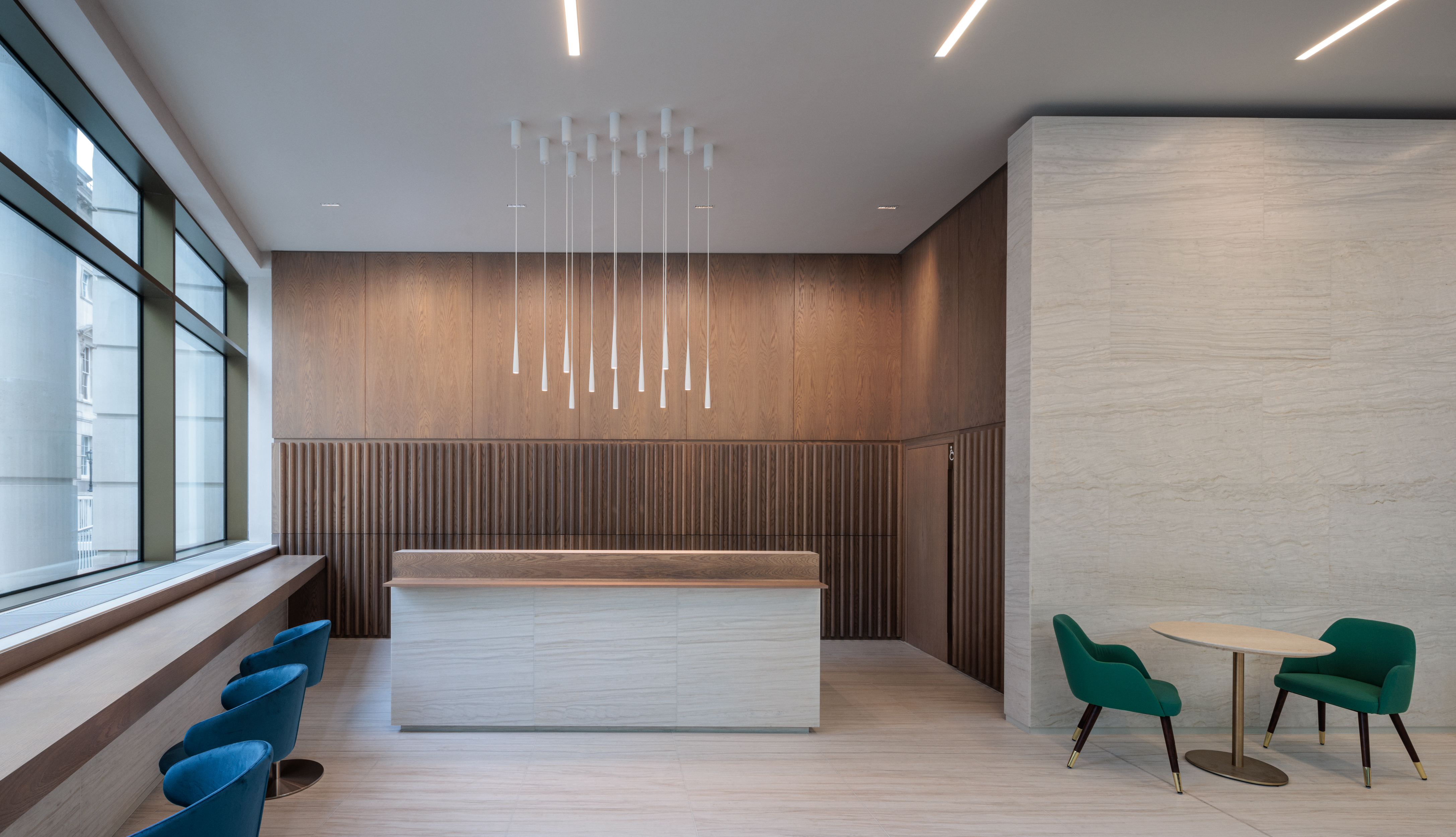
Contemporary Singapore interiors favour hard, reflective materials — polished concrete, glass partitions, stone and large windows. These look striking but reverberate, so speech and noise build up.
In a workplace, that reverberation reduces speech clarity and concentration. In a restaurant, it raises the overall noise level until diners have to speak over each other. The space works against the experience it was designed to create.
The reflective-surface problem
Hard architectural surfaces reflect sound. Glass façades, stone walls and exposed concrete all add to the reverberation, so something in the room has to absorb sound to balance it — and the ceiling is the natural place to do it.
The ceiling is the largest uninterrupted surface in most rooms, which makes it the most effective place to add absorption — and the least intrusive, since it is out of the line of sight and touch.
How Acoustic Plaster Compares to Other Solutions
Several products control reverberation. They differ mainly in how they look.
Suspended acoustic tiles are effective and economical, but the visible grid is exactly the look many designers are trying to avoid in a premium space.
Acoustic baffles and panels hang from or mount onto surfaces. They work well and can be a design feature, but they are deliberately visible objects in the room.
Acoustic plaster delivers absorption while disappearing into the architecture as a seamless ceiling. It is the premium option when the brief calls for both quiet and a clean, uninterrupted finish.
The trade-off is cost and craft: acoustic plaster is a specialist, hand-applied system, so it is an investment relative to a tiled ceiling. Where the architectural intent justifies it, that investment buys a result the alternatives cannot match.
Where Acoustic Plaster Works Best
© Dirk Lindner
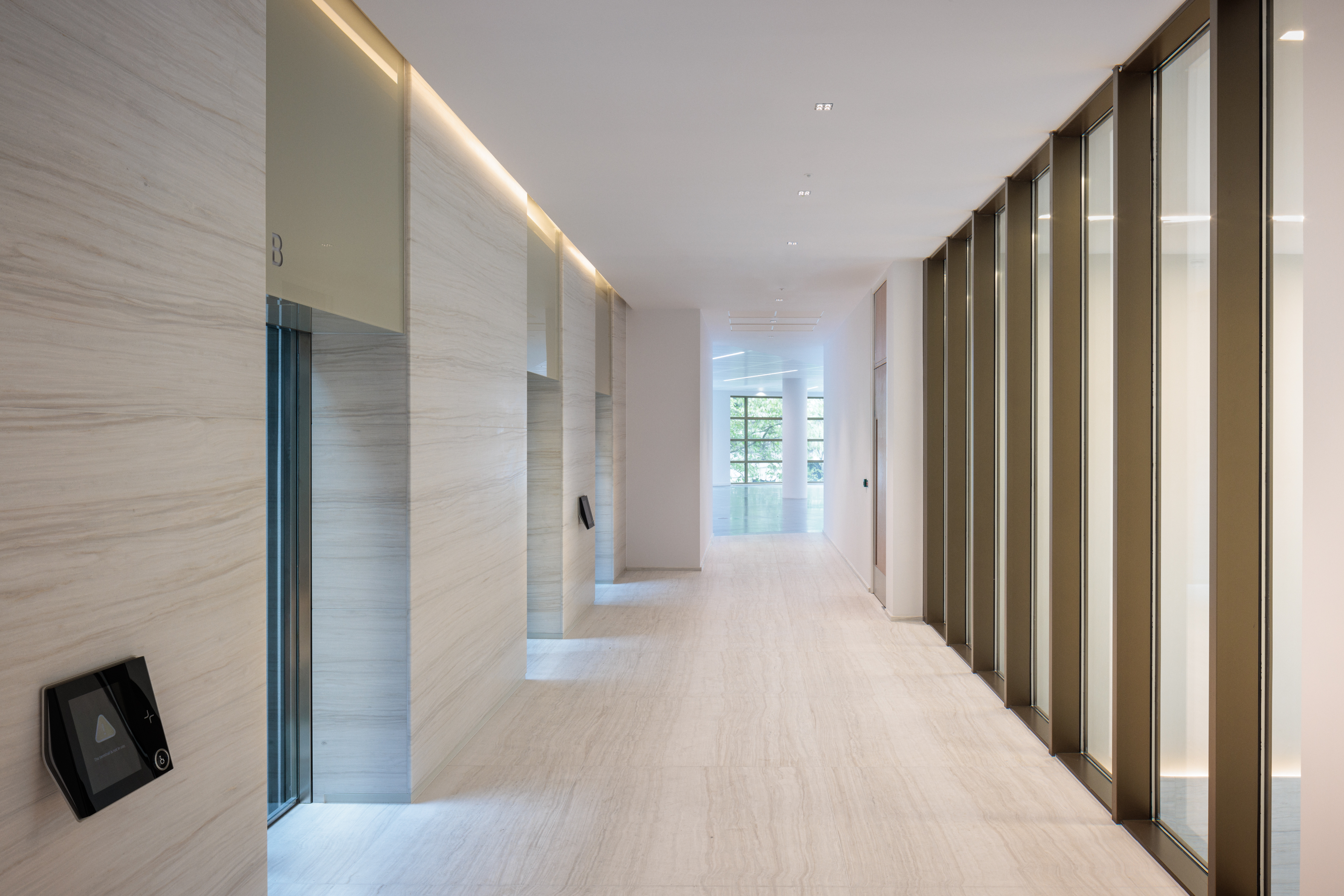
Acoustic plaster earns its place wherever both acoustic comfort and a refined look are non-negotiable:
-
Offices and meeting rooms — controlling reverberation in open-plan and glass-walled spaces without a tiled grid.
-
Restaurants and bars — keeping ambient noise comfortable while preserving a designed, hard-surfaced aesthetic.
-
Galleries, lobbies and showrooms — quiet, gallery-clean ceilings that don't distract from what's on display.
-
Premium homes — media rooms, double-height living spaces and open-plan interiors where echo would otherwise intrude.
In each case the common thread is a space that has been designed to look a certain way, where a visible acoustic product would compromise the design.
Specifying and Installing Acoustic Plaster
Because it is a system, acoustic plaster needs to be planned in rather than added on.
Plan it early
The acoustic backing panels and their fixing affect ceiling build-up and depth, so the system is best coordinated with the ceiling design and services (lighting, sprinklers, air-conditioning) from the start. Retrofitting is possible but tighter.
Use specialist applicators
The seamless finish depends on skilled hand application — this is artisan work, not a standard plastering job. The quality of the installer determines whether the ceiling reads as a flawless monolithic surface.
Match the build-up to the acoustic goal
How much absorption a room needs depends on its size, use and other surfaces. Share the brief — the type of space and how quiet it needs to be — so the system can be specified correctly rather than guessed.
To scope an acoustic plaster ceiling for a Singapore project, get in touch with Prospec to discuss the space and the right system.
Frequently Asked Questions
How does an acoustic plaster ceiling absorb sound?
A microscopically porous plaster layer lets sound pass through into an absorbent backing panel rather than reflecting it back into the room. The visible surface stays a smooth, seamless plaster finish while the panel behind it does the absorption.
Does acoustic plaster look different from normal plaster?
No — that is the point. From below it reads as a continuous, monolithic plastered ceiling with no visible joints or grid. The acoustic function is hidden in the layers behind the finish.
Is acoustic plaster suitable for offices and restaurants in Singapore?
Yes. It is well suited to open-plan offices, glass-walled meeting rooms and hard-surfaced restaurants, where it controls reverberation and noise while keeping the clean, uninterrupted look those interiors are designed around.
Can acoustic plaster be installed on an existing ceiling?
Often yes, but it is a system with backing panels, so it is best planned with the ceiling design and services. Retrofitting is possible — share the existing ceiling build-up with your supplier so they can advise.
Is acoustic plaster more expensive than acoustic tiles?
Yes. It is a specialist, hand-applied system, so it costs more than a suspended tile ceiling. It is specified when the design calls for genuine acoustic performance and a seamless finish that tiles or baffles cannot provide.